Do you like films?
Okay, let's go a step further. Do you love films?
Let's take another step. Do you go deep into a movie and analyse the cinematic relevance or the directorial glitches that you seem to spot more readily than your friends?
You could be a cinephile — a film enthusiast passionately into cinema. Your close acquaintances know you as a living encyclopaedia of movies or affectionately call you a "movie buff."
 Image by kues1 on Freepik
Welcome to the World of Cinephilia
So, what is cinephilia? As film historian Thomas Elsaesser says, it "reverberates with nostalgia and dedication… more than a passion of going to the movies and only a little less than an entire attitude towards life."
Movies become an inseparable part of life, and you watch with the intent of a critic who may find the sublime in the mundane but may also be unimpressed by a box-office blockbuster. Someone who is often well-versed in the technical nitty-gritty of filmmaking and can pass a critique that's taken seriously even among the film fraternity.
Imagine a group of such film fanatics expressing their views on a movie; the potential impact could be far-reaching.
However, before we delve into the critical role they play in the film and entertainment industries, let's take a walk down memory lane.
History of Cinephilia
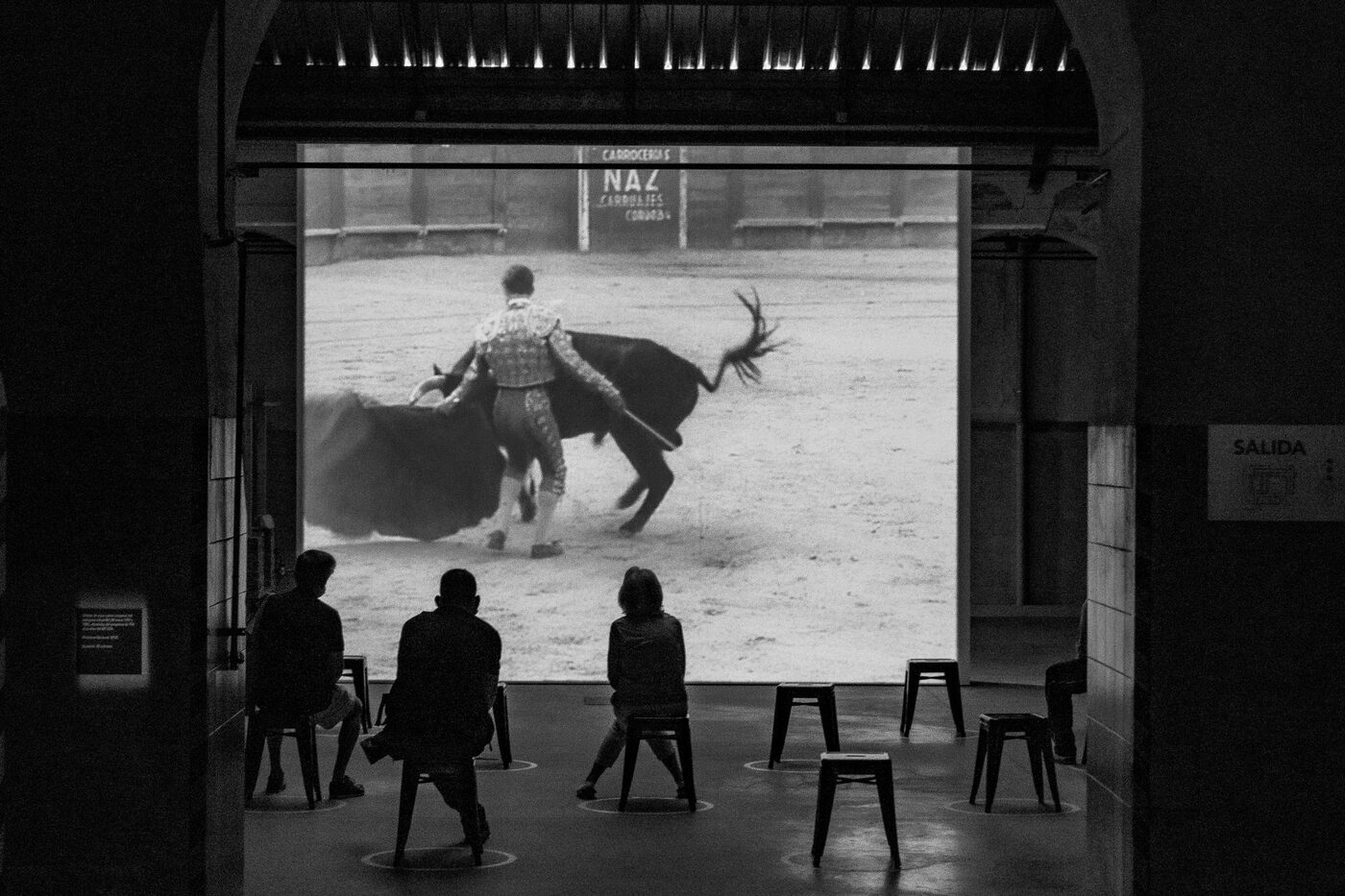 Image by Jose Antonio Gallego Vázquez on Pexels.com
"All the world's a stage" — the global cinephilic evolution
Film clubs and publications where like-minded moviegoers came together to share their views and engage in topical discussions started cropping up in the silent era.
As the industry evolved, so did these clubs. With the increasing demand for older films at the advent of the sound era, the first major organisation devoted to film preservation, Cinémathèque Française, was formed in Paris.
These establishments flourished in the post-World War II era. Screenings of foreign films and even programmes organised by local film clubs resumed amidst an enthusiastic response from the city's intellectual youths.
Two of the most prominent groups of this period were the Ciné-Club du Quartier Latin (Cinema Club of the Latin Quarter) and Objectif 49. Some of the most renowned film critics and filmmakers emerged from these groups in the next few years. The notable names include André Bazin, François Truffaut, Claude Chabrol, Jean-Luc Godard, Jacques Rivette, Agnes Varda, and Luc Moullet, among others. Together, they initiated the popular film movement, the French New Wave. The New Wave challenged filmmaking traditions and pushed for iconoclasm and experimentation.
The French cinephiles took particular interest in films directed by legendary filmmakers, such as D. W. Griffith, the Lumière brothers, Alfred Hitchcock, and Georges Méliès.
The success of the French New Wave rubbed off on the cinephiles and filmmakers of Europe and America in the 1960s and 1970s. Dubbed the Golden Age of movie-going in the US by critics like Susan Sontag, the period saw internationally acclaimed directors create a great impact on American film enthusiasts. Ingmar Bergman, Akira Kurosawa, Michelangelo Antonioni, and Federico Fellini influenced the American New Wave, which led to a new crop of experimental directors like Woody Allen, Martin Scorsese, Peter Bogdanovich, and Francis Ford Coppola, who went on to repaint the canvas of filmmaking.
The Indian Perspective
The performing arts in India have their roots in the Vedic period. Drama, music, and dance performances are mentioned in the Ramayana as well as Kautilya's Arthashastra.
Thus, with the strong cinephilic movements in the West, it was obvious that Indian film enthusiasts would also form their own associations.
Between 1947 and 1980, cine clubs began to proliferate under the leadership of several legendary directors from various regions of India. Some of the pallbearers of these initiatives were Satyajit Ray, Mrinal Sen, Adoor Gopalakrishnan, Basu Chatterjee, Mani Kaul, Ritwik Ghatak, Shyam Benegal, Kumar Sahani, and G. Aravindan.
Oscar-winner Satyajit Ray founded the Calcutta Film Society in 1947. It was India's first film society dedicated to feature films after documentary filmmakers set up the first society in Mumbai (then Bombay) in 1942.
Gradually, similar bodies grew in Delhi, Chennai, Trivandrum, Patna, and other places.
In 1959, the Federation of Film Societies of India became the central governing body for all these film clubs, with Ray as President.
So What Were the Fundamental Objectives Behind Forming These Establishments?
The common thread that binds all these associations is the love of watching movies. However, it goes beyond just the entertainment quotient. Members of these bodies are highly evolved movie buffs who enjoy the pre-screening and post-screening debates almost as much as they do watching the films.
If we are to find the key points that led to the formation of cine-clubs across the globe, then the following pointers can be mentioned:
- They brought like-minded film fanatics under one roof to watch and celebrate films.
- It opened the doors for lesser-known regional or international films to be showcased in front of an intellectual audience who would appreciate good work, irrespective of its commercial value.
- Intriguing, informed, and intense discussions that formed an obvious part of these clubs paved the way for great filmmaking talents to emerge from them.
- The film industry took their viewpoints and opinions seriously, which served as the seed for future generations of innovative films.
The Influence of the Digital Era
 Image by Cottonbro Studio on Pexels.com
As the above discourse suggests, the cinephilic communities were restricted to members only in many cases or to highly enthusiastic moviegoers who wanted to be a part of such groups. This meant that they were not really part of the mainstream movie world.
With the advent of VHS (Video Home Systems) tapes in the 1980s, the reach of movies spread massively. Movie buffs could binge on a wide variety of films from the comfort of their homes.
The Internet and streaming platforms further changed the game for cinephiles. Netflix, Prime Video, etc. allow you to select movies across different genres. They also curate suggested cinema based on your viewing history. From recent releases to classics, you are spoiled for choice. What's more, it's on-demand, anytime, anywhere. So be it on your favourite couch at home or in a hotel room after a long day at a corporate seminar, film enthusiasts can now satiate their movie thirst almost at will.
However, they come with their limitations as well. Algorithmic suggestions can often lead to a less experiential viewing experience as you end up watching the types of films you usually watch. Here quantity supersedes quality, as the platforms are keen to keep you hooked for a longer duration by throwing content that you are likely to watch. Conventional cinephilia revolved around experimenting with new niches and thus expanding the scope of analysing movies of different genres on varied technical and non-technical aspects.
On the flip side, online streaming has opened up foreign movies to a much wider audience across the globe. A classic example in this context is the 2020 Oscar-winning film, "Parasite," which garnered massive viewership on online streaming platforms.
The lockdown during the pandemic gave movie buffs several online options to watch and chat about movies in specific forums. Some popular virtual cine clubs that popped up in this period were the Isolation Film Club, @BFI at Home, Sunday Cineclub, Secret Sofa, Peccadillo Sofa Club, Reclaim the Fame, and more. They covered multiple genres to cater to the different preferences of cinephiles. While some tilted towards jaunty humour, others were meant for LGBTQ+ movie lovers. To create a community feel, there were Facebook chats, Zoom chats, and other ways to engage and share views with the group members.
The internet has further broadened the connectivity scope of cinephiles, as they can engage on social media platforms like Twitter, Facebook, Letterboxd (specifically meant to voice your views on films), etc. However, expressing their views on public platforms entails that they invest meaningful time in critically examining the films before sharing their opinions. This, in turn, sharpens their technical and intellectual understanding of filmmaking. Modern applications and easy-to-procure equipment further invite them to make their own short films, thus expanding the reach of this art.
Now let's go beyond the realm of movie buffs and step into the world of other entertainment enthusiasts.
The Expanding Horizons of Telephilia
As the term suggests, it refers to television enthusiasts who are often found glued to their TV screens.
Considered inferior to cinephilia by some old-school intellectuals, telephilia has gained significance in the last three to four decades. The quality of television content has improved drastically since the 1980s, with series such as The Sopranos, Mad Men, Homeland, Friends, etc. revolutionising content consumption on television.
In the Indian context, televised versions of epics like the Mahabharata and Ramayana attracted scores of viewers. Families queued up to watch primetime tele-series, such as Nukkad, Bunyad, Hum Log, Malgudi Days, and more.
OTT platforms have added a new dimension to television soaps. From international series like Suits, Jack Ryan, The Crown, etc. to Indian binge-worthy web series such as Mirzapur, Sacred Games, Delhi Crime, etc., they have captivated audiences of various demographics.
Even though some parents may not be impressed with the expanding landscape of television and web series, the big question for the younger generation is, "Can this vast and evolving world of cinephilia and telephilia offer you rewarding career options?"
Turning Passion into a Profession
 Image by Cottonbro Studio on Pexels.com
The famous Japanese concept of Ikigai revolves around finding a livelihood based on your deep interests. When an occupation becomes a vocation, you enjoy a blissful life.
For movie buffs, what could be more enticing than a career built around films? Let's look at some of the professional paths that you can pursue if you are passionate about cinema or tele-series.
- Set designer: Be it the palatial residence of the villain or the dilapidated dwelling of the hero, a set designer has to create magic around the scene, character, and plot of the movie. They are an integral part of the production team.
- Editor: One of the most critical behind-the-scenes positions, the editor lends finesse to the craft of filmmaking.
- Screenwriter and scriptwriter: The twists and turns of the tale, the dramatic personification of the lead characters, and the compelling dialogues that become talks of the town all form part of a screenwriter or scriptwriter's role.
- Cinematographer: The visuals capture the imagination of the viewers. Cinematographers weave magic with their artistry in making every scene picture-perfect.
- VFX artist: With the influx of modern technology in cinemas, VFX artists are in great demand. From pure animations to graphics-heavy movies like The Lord of the Rings, Harry Potter, etc., VFX specialists play a key role in this age.
- Film critic: This might be the most popular choice for movie lovers. Imagine getting paid to watch movies? You could become a sought-after film critic if you have a flair for writing coupled with a journalistic degree.
Final Words
In the maddening hustle of the material world, films and television are sources of much-needed entertainment. They ignite our imagination and infuse a sense of inspiration amidst the cacophony of demotivating disasters around the globe.
Let us embrace the melody of life through the lenses of the tinsel world.